
On the last day of IBC, Ludovic Bostral, a brilliant French video market analyst, sent me two questions. Good ones. The kind of questions that force you to drop the vendor pitch and say what you actually think. Here’s what I told him.
First question: what did the show floor say that IBC Daily didn’t?
“The official story this year had three headlines: latency cut by three, AI everywhere, and archives waiting to be monetized. So what was overplayed, and what should we have been talking about instead?”
Overplayed #1: “AI everywhere”
Walk the halls and count. About 90% of the AI I ran into was captioning, reframing, generated metadata, and synthetic hosts or actors. Great demos, and genuinely useful stuff, but not transformational stuff.
Very little of it survives contact with a real live event. Put it in front of a World Cup match, where the high-stakes money decisions are still left to humans, and most of it quietly steps aside.
Overplayed #2: “Latency cut by three”
Sure, the glass-to-glass number is real. But in a demo environment, at a trade show.
In production, a different set of problems eats that gain alive: ad insertion, content protection, the last mile, and everyone’s favorite, the sync problem where the goal alert hits your phone before the goal hits your screen. Sub-second end-to-end streaming is achievable in 2026, but nobody is paying for it yet at premium live scale. We’ve already established that streaming can beat broadcast latency (~5 to 6 sec glass to glass). Does that cut it for most live content?
The blind spot: the plumbing
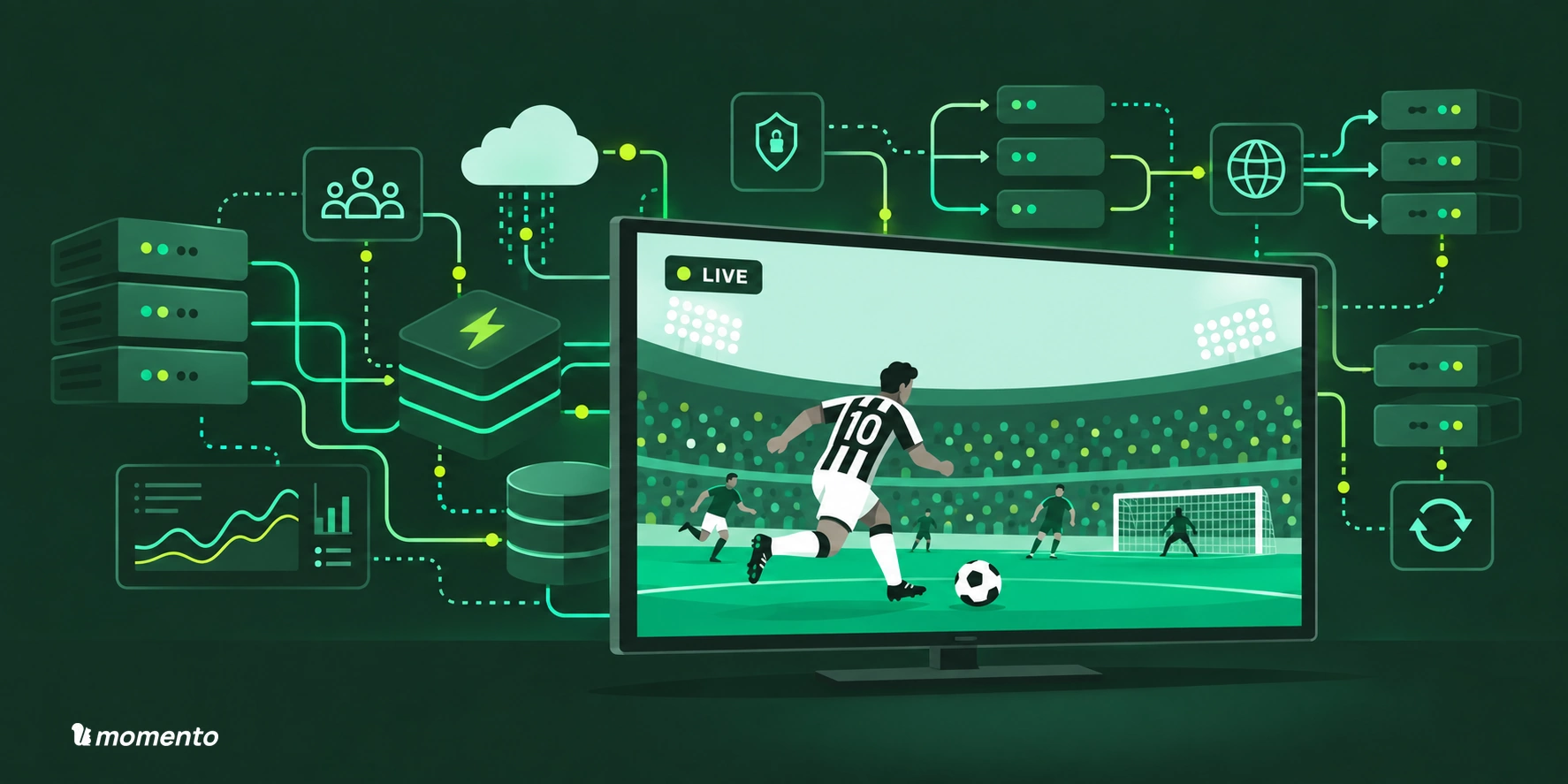
What nobody said loudly enough is that the plumbing decides whether a big live event holds or falls over. Concurrency spikes, the token bomb at kickoff, auth, failover, cache hit ratio, origin offload. Real-time observability, meaning actual real time, not dashboards running three or five minutes behind while your audience is already on social media telling everyone the stream is down.
One line sums up the conversation this industry should have been having in 2026, the one I kept from the FIFA World Cup: 104 matches. 5 billion viewers. 0 margin for error.
Second question: September 2027, same hall. What sounds ridiculous, and what takes over?
The phrase that will age worst: “AI-powered”
As a selling point, it’s already on borrowed time. By 2027, AI will be assumed by default, the same way cloud became. Nobody sells “cloud” anymore. You sell what you do with it. “AI-powered” is heading to the same retirement home.
The topic that will own the show: actually two, and they’re linked
The media landscape is going through a major consolidation
Platforms are consolidating into mega-conglomerates. Not only the big mergers that have made the big news throughout 2026: Fubo + Disney, WBD + Paramount… but also a trend of legacy broadcasters signing distribution deals that push their content onto the same large ubiquitous platforms. At IBC, I had discussions on how TF1 getting distributed by Netflix, or France Télévisions with Prime Video are durably changing the French streaming landscape. The result is simple math for both vendors and content owners: the number of real opportunities to differentiate is collapsing. Fewer buyers, bigger bets, less room for error on every one of them.
And how do I get my token consumption under control?
Make or buy gets harder in 2027, because everyone is now using AI to build their product and try to stand out in a shrinking market. But AI-driven development is a one-way door. You create technical debt, and you need more and more tokens just to maintain a codebase the AI wrote. You can’t hand 100,000 lines of generated code to the last senior engineers you haven’t laid off yet and ask them to debug it overnight.
Put those two together and you get the real 2027 question: with fewer customers to win and a growing token bill to feed, what do you build yourself, and what do you trust someone else to run at scale?
That’s the conversation I want to have at IBC in Amsterdam next year. The plumbing isn’t the most glamorous part of the stack. But it’s just the part that decides whether you’re still standing at the final whistle.
Preparing for your next major live event? See how Momento handles the plumbing behind real-time media at scale.