
Last year, the first edition of Buffer-Free Video)^AI left me in disbelief that a scrappy ten-week sprint had pulled 150 streaming professionals into one room. This year the question in my head was different. Not “can we do it again?” but “can we keep the signal-to-noise ratio that made the first one special?”
I believe we did, and the numbers back it up.
The Room We Wanted
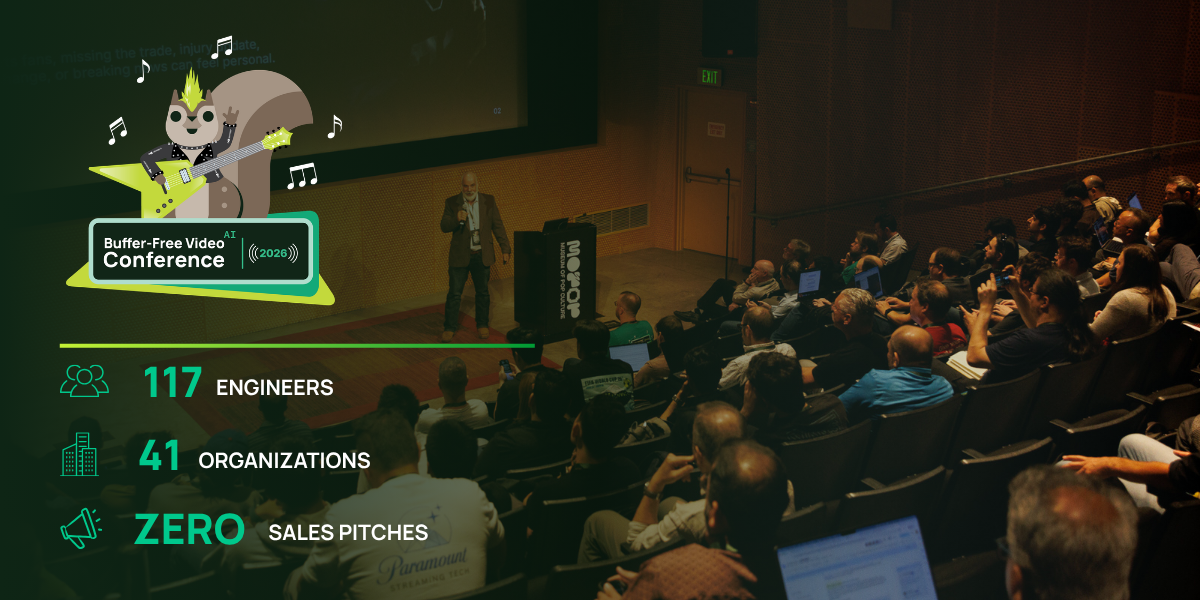
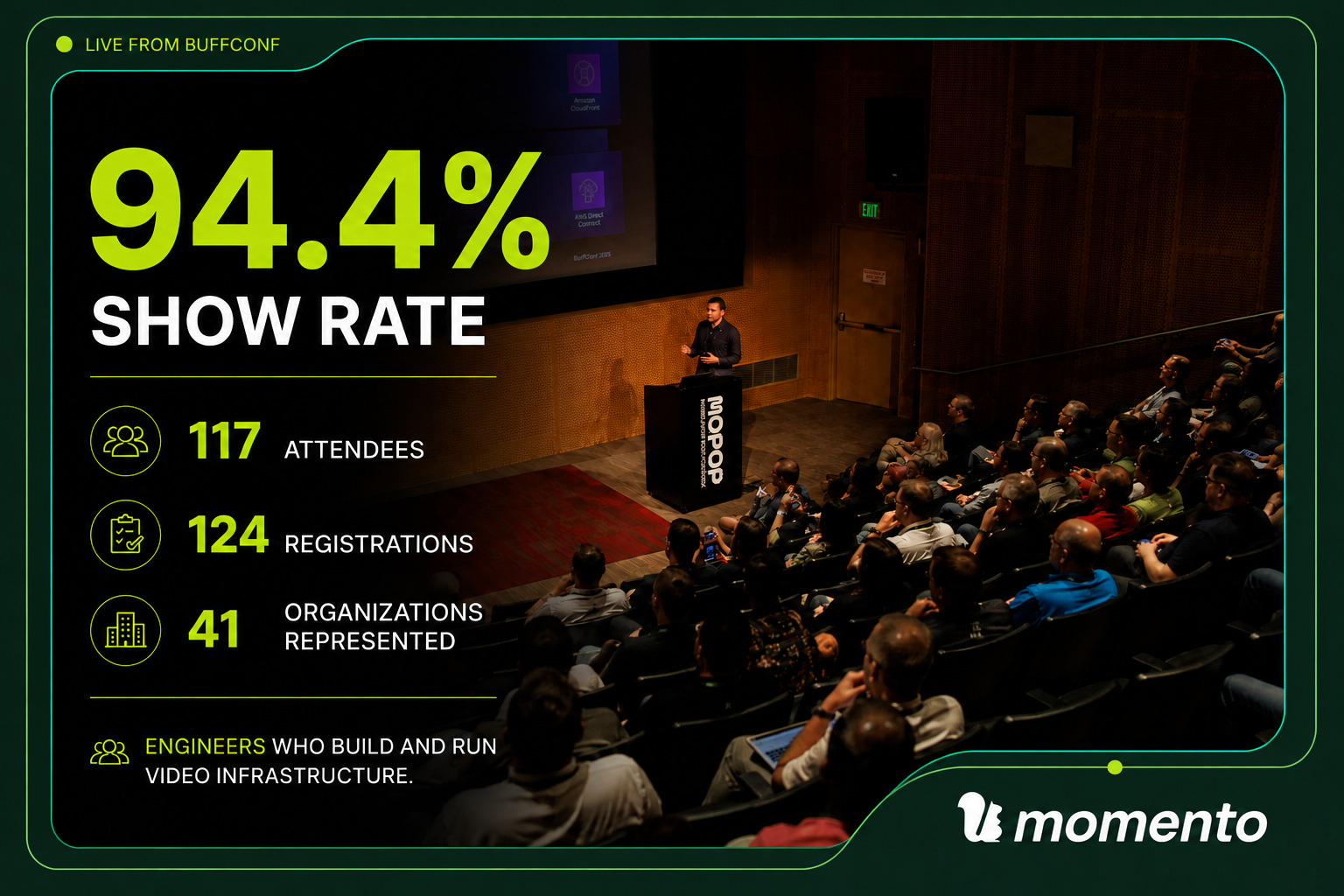
Here is the stat I am proudest of: we had 117 attendees show up out of 124 registrations. That is a 94.4% show-rate. If you have ever organized a tech conference, you know the typical number hovers around 60%. People register, life happens, half the badges never get picked up.
That did not happen here, and it tells you something about who was in the room. Definitely not people collecting free T-shirts, stickers, Mo plushies or vintage green Elemental swag (thanks Kiran!). Of the seven no-shows, six were from sponsoring organizations who had other folks covering the event.
Those 117 people represented 41 unique organizations, from the largest broadcasters, tech platforms, video infrastructure providers… the full spectrum of who actually builds and runs media workloads at scale. When you get that kind of density of real operators in one place, the hallway conversations become as valuable as the sessions. Actually, maybe even more.
We Pre-Screened the Pitches Out
Here is the thing we are strict about. BuffConf is not a place to sell. Every proposed session got human-screened, and anything that read like a vendor pitch got sent back. We prioritized end-user and practitioner voices, the people who have actually been paged at 3am when things flinched.
The result was 22 technical sessions with 29 speakers from 17 companies. And critically, 40% of our speakers were non-vendors. We are talking real production stories from operators like Paramount, Netflix, FOX, CBS Interactive, Meta and Red Bull Media House. Not “here is our roadmap.” More like “here is what we tried, what failed and what finally held up.”
It would be easy to fill an agenda with vendors who have marketing budgets and room for another video nerd conference (all the more when the traditional bigger one is seemingly canceled silently this year… of course you know what I’m talking about!). It is much harder, and also much more valuable, to get the operators to stand up and tell the unvarnished truth about their infrastructure. When they do, everyone in the room learns something they can use in their own work.
What The Presentations Covered
Three main themes ran through the two days, and a handful of sessions captured each one.
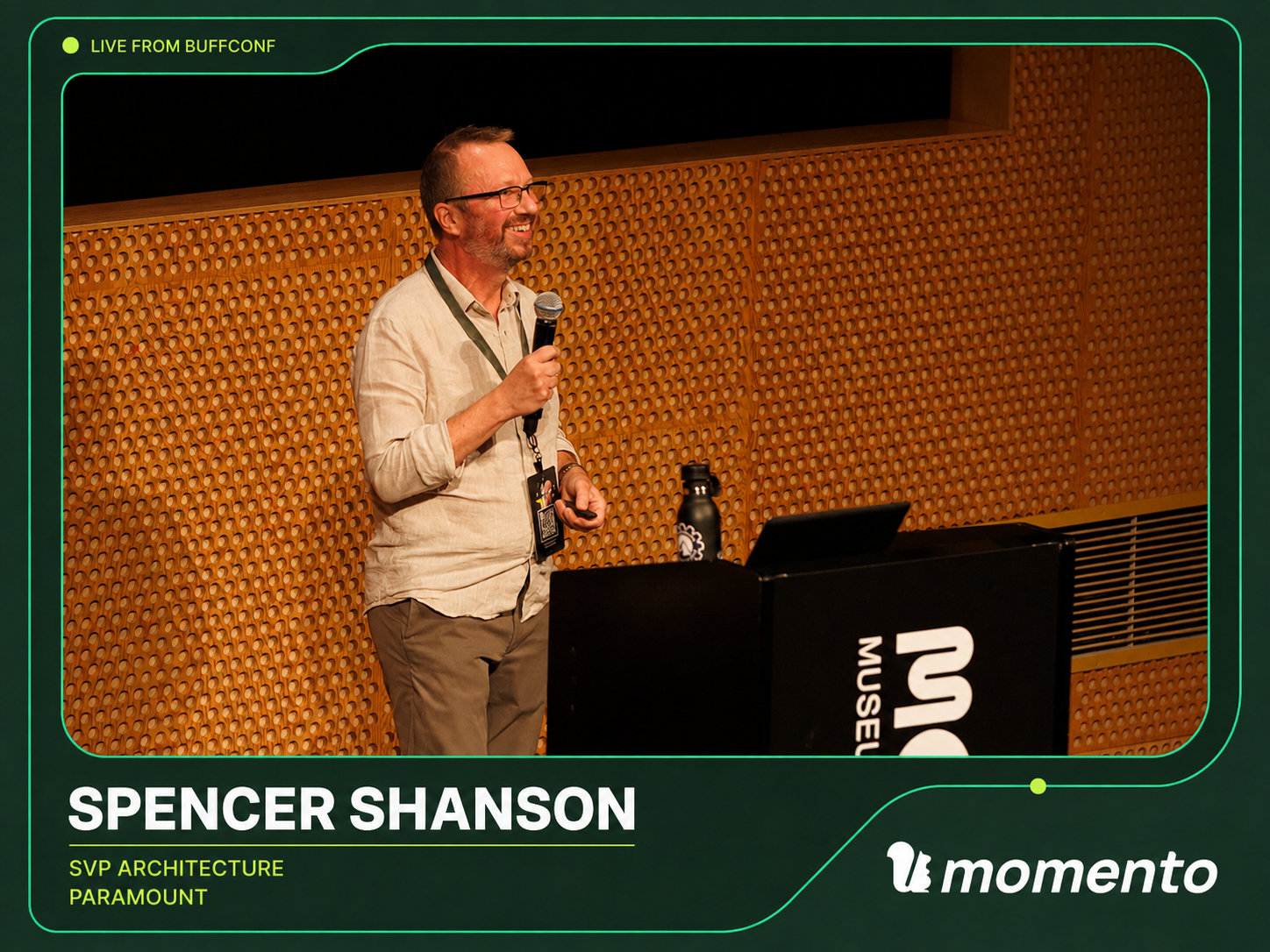
Production workflows at scale. I opened with “104 Matches. Five Billion Viewers. Zero Margin for Error,” walking through the FIFA 2026 World Cup numbers and what global live scale actually demands, with no excuses. Spencer Shanson from Paramount then told the story of scaling a FAST platform from a handful of channels to thousands. That kind of journey, from a few streams to an entire catalog of linear channels, is exactly the operational reality most of the room is living on a daily basis, and hearing it from someone who has actually done it is worth more than any architecture diagram. And when “production at scale” means “at Netflix’s scale”, who better than Sunjeet Singh and William Schor could explain how Netflix handles over one billion RPS on 120,000 nodes?
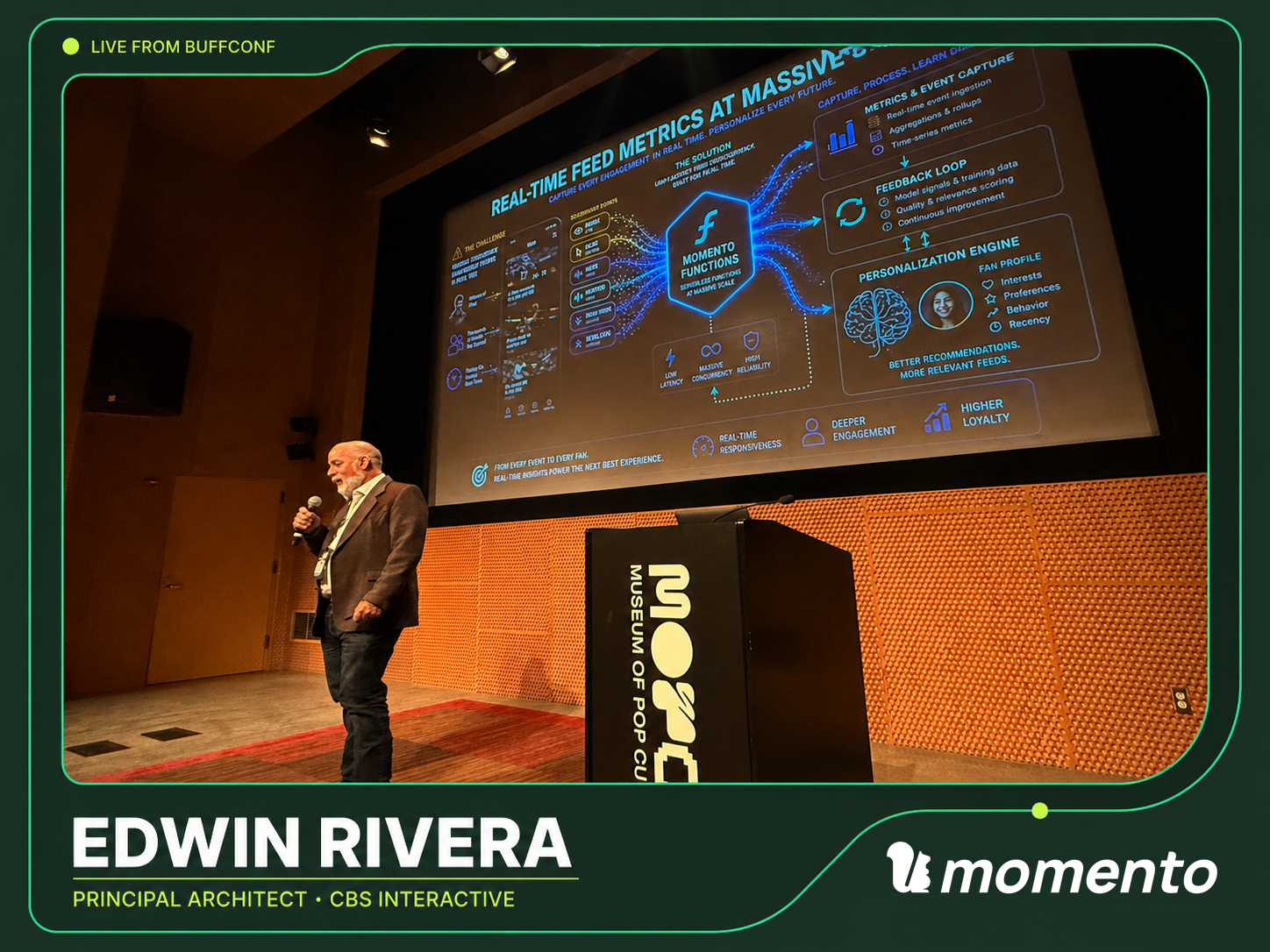
Practical AI, and honest boundaries around it. This was the part I found most refreshing. Nobody stood up and told us AI was going to solve everything. It’s still a journey, and our keynote speaker, Manish Rao, showed us all the progress that AWS Elemental Inference has made since NAB. It’s staggering how three months can mean a world of difference at the current speed of AI innovation. Edwin Rivera from CBS Interactive showed how CBS Sports built an AI-powered “For You Page,” blending editorial curation with embedding-based recommendations to actually move engagement. Content discovery in sports is one of the richest problem spaces in our industry right now. And Jeffrey Kember from NVIDIA walked through what accelerated computing is doing for encoding, quality, and real-time media workflows. A reminder that we are genuinely at the beginning of AI for media, not the end. Across the AI sessions, we also saw token efficiency work borrowed straight from video compression concepts, automated QC loops, and an edge anti-piracy simulation harness. Real implementations, with the scars to prove it, paired with hands-on framework training so engineering teams could take something home and build.
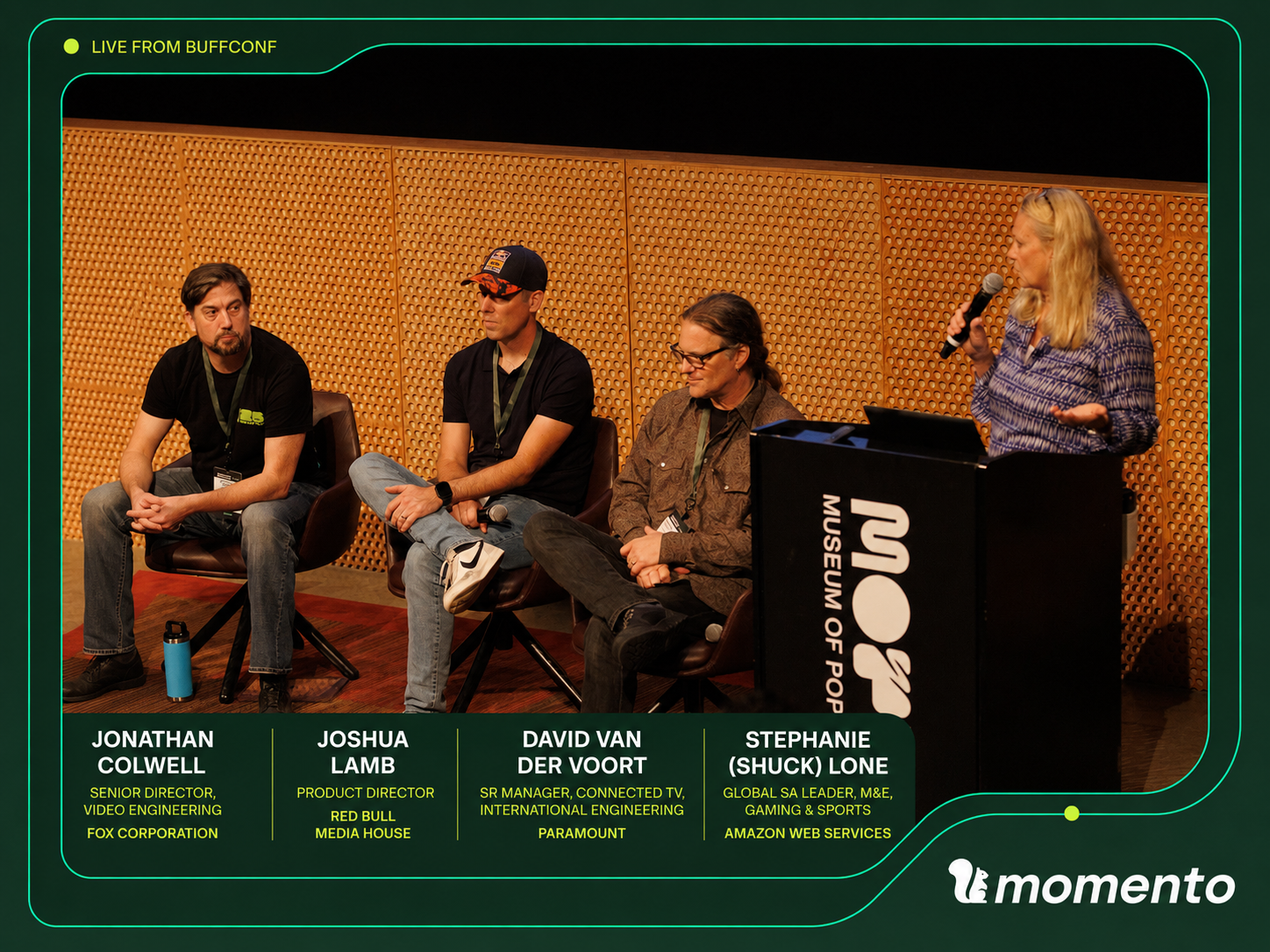
The client-side reality. Our panel on Optimizing Playback SDKs and Device Capabilities brought together Jonathan Colwell from FOX, Joshua Lamb from Red Bull Media House, and David Van der Voort “DVD” from Paramount. Three very different takes on the same daily chaos: supporting every device under the sun, with every usage pattern. That fragmentation is a grind everyone in playback knows intimately, and getting three operators to compare notes in the open was exactly the kind of session you cannot get anywhere else.
We kept the format balanced through all of it. Deep technical talks, real networking time, and interactive workshops where people could get their hands dirty. Room to think, argue, and go deeper.
The Q&A Is Still the Best Part
Same as last year, the Q&A sessions were electric. A technical crowd asked technical questions, and every speaker rose to meet them. Those exchanges are where a prepared talk turns into something better, where you get past the slides into the messy details that only come out when a peer in the audience pushes on exactly the right point.
That is the whole reason we do this in person. You cannot replicate that online.
Thank You
A conference only works because of the people who believe in it before it exists.
To our speakers, from Paramount, Netflix, CBS Interactive, FOX, Red Bull Media House, NVIDIA, Meta, AWS, Visionular, Bitmovin and every company that sent someone to share hard-won lessons: thank you for choosing substance over spin. You are the reason people fly in.
To JP Saibene and Nicolas Gonzalez from Uruguay, to Ali Begen from Tűrkiye and to everyone who traveled a long way to be in Seattle: thank you for bringing the curiosity and the generosity that makes this community what it is.
To the Momento crew who pulled this together, and in particular Hannah, Mike, Kelsey, Maéline and everyone who spent months making a two-day event look effortless: thank you, I’m incredibly grateful and lucky to be working with you all.
And to the people who showed up: this community was the event. Your questions, your stories, your willingness to say “actually, that broke for us too” is what makes this community worth gathering. The streaming landscape keeps moving fast, especially where AI meets live video. We were all here to discuss the future of video, one honest conversation at a time.